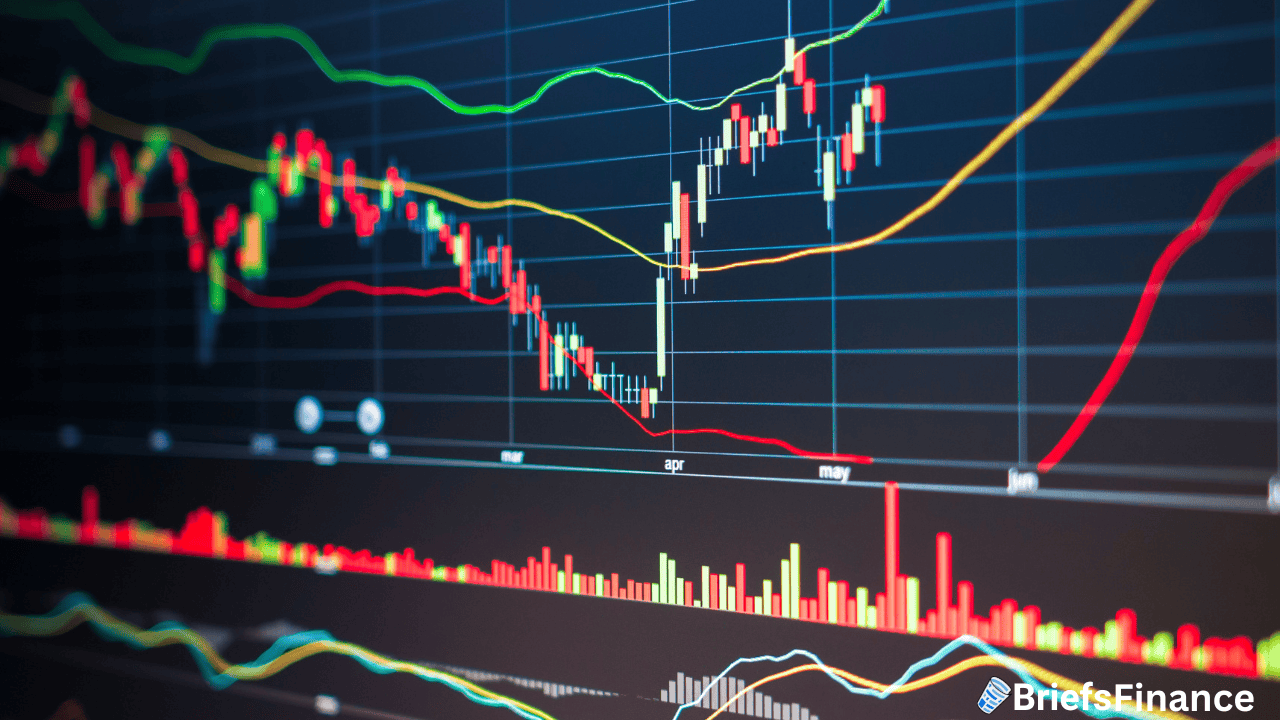
If you've ever checked the market before opening bell and seen headlines like "Stock futures point higher" or "Futures are down this morning," you might've wondered what that actually means.
Stock futures sound complicated. Futures are a type of derivative investment - that means your investing based on the performance of an underlying asset like a stock, crypto, or bond.
They're tied to advanced trading strategies that professional investors use.
But here's the thing - understanding what they are isn't actually that hard.
And knowing how they work makes you a smarter investor, even if you never trade them yourself.
Let’s break down what stock futures are (with examples), why investors use them, and the risks every investor should know about.
Keep in mind: Stock investing doesn’t have to be complicated.
Our market analysts are breaking down individual stock market opportunities in plain english every week in Market Briefs Pro.
We make the potential opportunities clear and give you all of the data and research you need to make a smarter investment decision.
Subscribe to Market Briefs Pro here.
What Are Stock Futures?
A futures contract is an agreement between two parties to buy or sell an asset at a predetermined price on a specific future date.
Here’s an example: You agree today to buy 100 shares of a stock at $50 per share three months from now.
No matter what happens to the stock price between now and then, you're locked into that $50 price.
If the stock price goes to $60, you win - you get to buy at $50 and immediately have a $10 per share gain.
If it drops to $40, you lose - you're still obligated to buy at $50 even though the stock is now worth less.
That's a futures contract in its simplest form.
Stock futures specifically track either individual stocks or stock indexes like the S&P 500, Dow Jones, or NASDAQ.
When you hear "S&P 500 futures are up," traders are betting that the S&P 500 will be higher when the market opens.
How Do Futures Contracts Work?
Here's what makes futures different from just buying stocks:
Standardization
Futures contracts are standardized. Each contract specifies:
- The exact asset being traded.
- The quantity (for S&P 500 futures, each contract represents $50 times the index value).
- The expiration date.
- The settlement terms.
Leverage
Futures use leverage. You don't pay the full value upfront.
Instead, you post margin - a percentage of the contract value (often 10-20%). This amplifies both gains and losses.
If you control $50,000 worth of S&P 500 futures with $5,000 margin and the index goes up 5%, you've made $2,500 - a 50% return on your margin.
But if it drops 5%, you've lost $2,500 - a 50% loss on your margin.
Exchange Trading
Futures trade on regulated exchanges like the Chicago Mercantile Exchange (CME).
The exchange acts as the middleman, guaranteeing both sides of the trade. This reduces the risk that the other party won't fulfill their obligation.
Daily Settlement
Futures are marked-to-market daily. Your gains and losses are calculated and settled every day, not just at expiration.
This means if your position moves against you significantly, you might face a margin call - a demand to add more money to your account.
Why Do Investors Use Futures?
There are two main reasons people trade futures: speculation and hedging.
Speculation
Traders use futures to bet on market direction. If you think the stock market is going higher, you could buy S&P 500 futures. If you're right, you profit from the move - amplified by leverage.
The flip side? If you're wrong, you lose money fast. And with leverage, those losses can exceed your initial investment.
Hedging
Institutional investors and fund managers use futures to protect their portfolios.
If you manage a large stock portfolio and you're worried about a short-term downturn, you could sell S&P 500 futures.
If the market drops, your futures position gains value, offsetting losses in your stocks.
Think of it like insurance. You pay a small cost now to protect against a bigger loss later.
Stock Futures vs. Forward Contracts
You might also hear about forward contracts. They sound similar to futures, but there are key differences:
| Feature | Futures | Forwards |
| Trading | Exchange-traded | Private agreement |
| Standardization | Standardized contracts | Customizable |
| Counterparty Risk | Exchange guarantees | Direct risk between parties |
| Liquidity | High liquidity | Low liquidity |
| Settlement | Daily mark-to-market | At expiration only |
| Regulation | Heavily regulated | Less oversight |
Both are complicated financial instruments. Futures offer peace of mind being exchange traded with standardized contracts.
Forwards are customizable, with less oversight - but both require a strategy in order to see success.
The Real Risks of Futures Trading
Let's be clear: futures are risky.
Here's why:
Leverage cuts both ways. A 5% market move might seem small when you're watching stocks.
But with 10x leverage through futures, that 5% move becomes a 50% gain or loss on your position. Small market movements create massive swings in your account.
You can lose more than your initial investment. Unlike buying stocks (where your loss is capped at what you paid), futures losses can exceed your margin.
If you have $5,000 in margin and the market moves sharply against you, you could owe more than you started with.
Time decay and expiration. Futures contracts expire. If you're holding a position into expiration and you're on the wrong side, you'll be forced to settle.
There's no "hold and hope it comes back" like you might do with stocks.
Complexity and emotion. Futures trade nearly 24 hours a day. Overnight price movements can wipe out positions before you wake up.
The speed and leverage make emotional decision-making dangerous.
Who Should Trade Futures?
Most long-term investors don't need futures. If you're dollar-cost averaging into index funds and building wealth over decades, futures add complexity without much adding value.
Futures make sense for:
- Professional traders with risk management systems.
- Institutional investors hedging large portfolios.
- Experienced investors using specific strategies (like covered calls or protective hedges).
If you're just starting out, your focus should be on building a solid foundation: emergency fund, consistent contributions to retirement accounts, diversified portfolios of stocks and bonds.
Advanced strategies like futures are seasoning, not the meal. You don't need them to build wealth.
How to Learn More About Futures
If you're interested in understanding futures more deeply, here's the path forward:
Start with education, not trading. Read about futures mechanics. Understand margin requirements, contract specifications, and settlement procedures.
Paper trade first. Many brokers offer simulated trading accounts where you can practice with fake money. Test strategies without risking real capital.
Start small if you do trade. Use a tiny portion of your portfolio. Never risk more than you can afford to lose completely.
Know your why. Don't trade futures because they sound sophisticated.
Use them only if they solve a specific problem - hedging a portfolio, gaining exposure to commodities, or implementing a well-researched strategy.
The Bottom Line On Stock Futures
Stock futures are agreements to buy or sell stocks at a set price on a future date.
They're powerful tools for speculation and hedging, but they come with significant risk due to leverage and complexity.
For most investors, understanding what futures are is more valuable than actually trading them.
When you see "futures are up" in the morning news, you'll know what it means: traders are betting the market will open higher.
But you don't need to trade futures to be a successful investor.
Consistent contributions, diversified holdings, and a long-time horizon will build more wealth for most people than any advanced strategy ever will.
Remember: complexity isn't a virtue. Simple strategies executed consistently almost always beat complex strategies you don't fully understand.
Looking for more stock market opportunities?
Subscribe to Market Briefs Pro to see what stocks, etfs, and more our market analysts are watching right now.