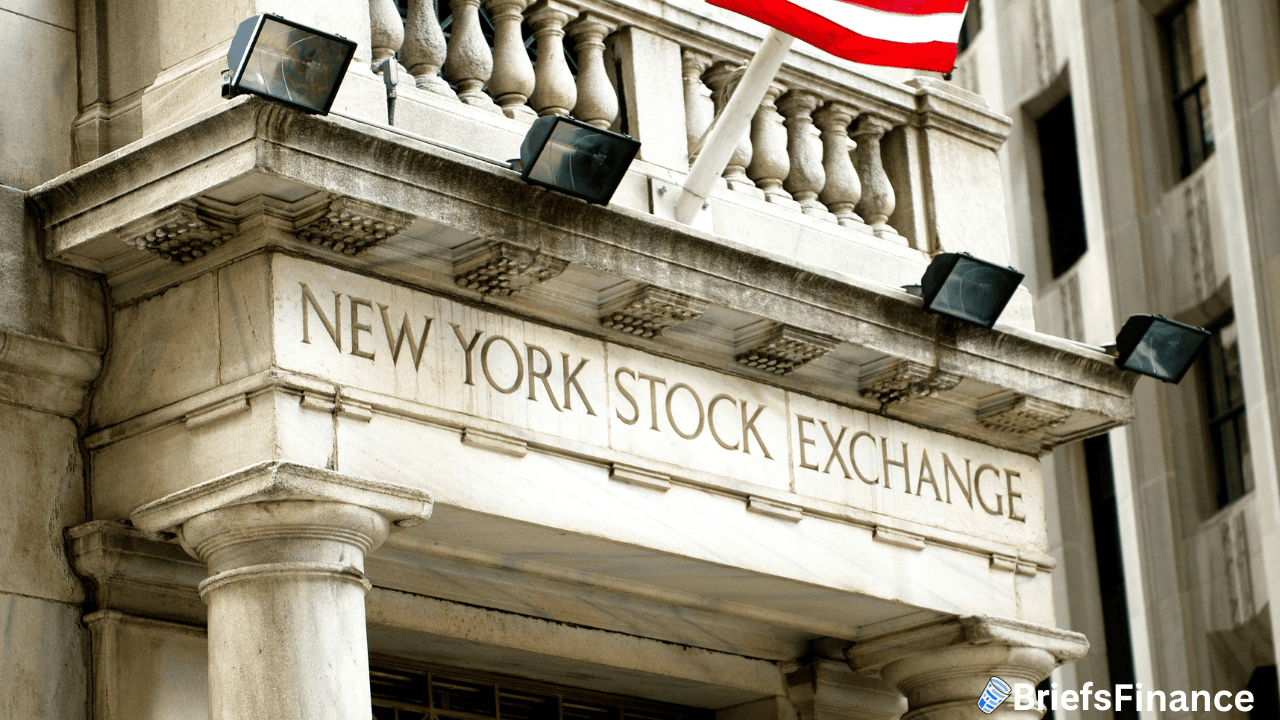
You've heard people say "the market is up" or "the market crashed today."
But what market are they actually talking about?
Most of the time? They're talking about the S&P 500.
It's one of the single most important numbers on Wall Street.
Investors use it as a benchmark to see how the overall market is performing - and if you want to build wealth, you need to understand what it is and how it works.
Let’s break down the S&P 500 - what it is, what’s in it, and why investors should care.
But first - most investors try to match the S&P 500’s returns.
At Briefs Finance? We’re looking to outpace the S&P in the long-term.
Read our full investment reports filled with potential stock market opportunities by subscribing to Market Briefs Pro.
So, What Is the S&P 500?
The S&P 500 is a stock market index. That means it tracks something - in this case, the 500 largest publicly traded companies in the United States, ranked by market capitalization (or "market cap").
Market cap is simply the total value of a company's shares. The bigger the company, the bigger its weight in the index.
Think of the S&P 500 as a report card for Corporate America. When it goes up, big U.S. companies are generally doing well. When it drops, investors are worried.
It's not just one company. It's 500 of them - all at once.
Why 500 Companies?
Because 500 large companies give you a wide, diversified view of the U.S. economy.
These aren't random companies either.
They span all 11 major sectors of the economy - technology, healthcare, finance, energy, consumer goods, and more.
That's what makes the S&P 500 such a powerful benchmark.
How Is the S&P 500 Different from the Dow or NASDAQ?
There are three major U.S. stock market indexes you'll hear about constantly:
| Index | What It Tracks |
| S&P 500 | The 500 largest U.S. public companies by market cap |
| NASDAQ 100 | The 100 largest non-financial companies by market cap |
| Dow Jones (The Dow) | Daily price movement of 30 prominent U.S. companies |
The S&P 500 is generally considered the most complete picture of the U.S. market. The Dow only covers 30 companies. The NASDAQ skews heavily toward tech.
If you want to know how the overall market is doing, the S&P 500 is the index most investors trust.
What's Actually Inside the S&P 500?
The companies in the index are massive. We're talking about household names - the kind of companies whose products you probably use every day.
Each company is weighted by its market cap. So bigger companies have more influence on where the index goes.
That's why you'll sometimes see the S&P 500 move because of news about just one or two major companies. When the giants sneeze, the index feels it.
The S&P 500 Is Not the Economy
This is one of the most important distinctions in all of investing.
The stock market - including the S&P 500 - is not the same as the economy. They sometimes move together, but not always.
There have been times when the economy was struggling but the stock market was rising.
And times when the economy looked fine but markets dropped hard.
A perfect example: In 2022, inflation hit 9.1% - a four-decade high.
The S&P 500 fell sharply. In March 2020, COVID hit and the S&P 500 dropped 34% in just weeks. But markets recovered faster than most people expected.
Understanding this difference is a superpower for investors.
Why Do Investors Care So Much About the S&P 500?
Because it's the benchmark everything else gets measured against.
When a fund manager says they "beat the market," they mean they performed better than the S&P 500.
When financial news talks about a good or bad year for stocks, they're usually referencing the S&P 500.
It's the scoreboard.
And here's the thing - most active fund managers don't beat it consistently over time. That's one of the biggest reasons passive investing, or tracking the index, has become so popular.
Can You Actually Invest in the S&P 500?
You can't buy the index directly - it's just a list.
But you can buy ETFs (exchange-traded funds) that track it.
Two of the most well-known S&P 500 ETFs are:
- SPY - managed by State Street, one of the largest asset managers in the world, with over $586 billion in assets under management.
- VOO - managed by Vanguard.
When you buy a share of SPY or VOO, you're essentially buying a tiny piece of all 500 companies in the index. One purchase. 500 companies. Instant diversification.
That's the appeal.
Both the VOO and SPY are slightly different in how they allocate capital to the fund, as well as the fees associated with investing in them.
But, the goal is the same - mirror the S&P 500.
What Makes the S&P 500 Such a Reliable Long-Term Tool?
A few things:
Size. 500 large companies across every major sector means you're not betting on one industry or one trend.
Liquidity. Because so much money flows in and out of S&P 500 funds, it's easy to buy and sell.
Track record. The index has historically recovered from every major crash - the dot-com bubble, the 2008 financial crisis, COVID in 2020.
It's never a guarantee, but history has been on its side.
Simplicity. As one of the world's most famous passive investors once said - don't look for the needle in the haystack. Just buy the haystack.
The S&P 500 and Market Events
The S&P 500 reacts to events constantly.
Interest rate decisions from the Federal Reserve.
Earnings reports from major companies. Global trade deals - or disruptions.
When the U.S. paused tariffs on China for 90 days in 2025, the S&P 500 had one of its best single days on record.
When tariff uncertainty spiked earlier that same year, the index dropped over 3% in a single trading session - representing trillions of dollars lost in market value.
But the S&P 500’s total market cap is around $58 trillion, as of February 2026 - so moving a few trillion dollars up or down is common.
That's how sensitive the index can be to big news.
This is exactly why understanding the S&P 500 isn't just for Wall Street. It affects everyone investing for retirement, building a portfolio, or just trying to grow their wealth over time.
The S&P 500: Bottom Line
The S&P 500 is the heartbeat of the U.S. stock market.
It tracks the 500 largest public U.S. companies, covers every major sector of the economy, and serves as the benchmark investors use to measure everything.
You can access it through ETFs like SPY or VOO. And whether you're a passive investor or an active one, knowing how it moves - and why - makes you a smarter investor.
That's the whole game: understanding what's happening, so you can make better decisions with your money.
Looking for more? Our analysts are finding new potential opportunities every week in Market Briefs Pro.
Get an edge on Wall Street - subscribe to Market Briefs Pro now.