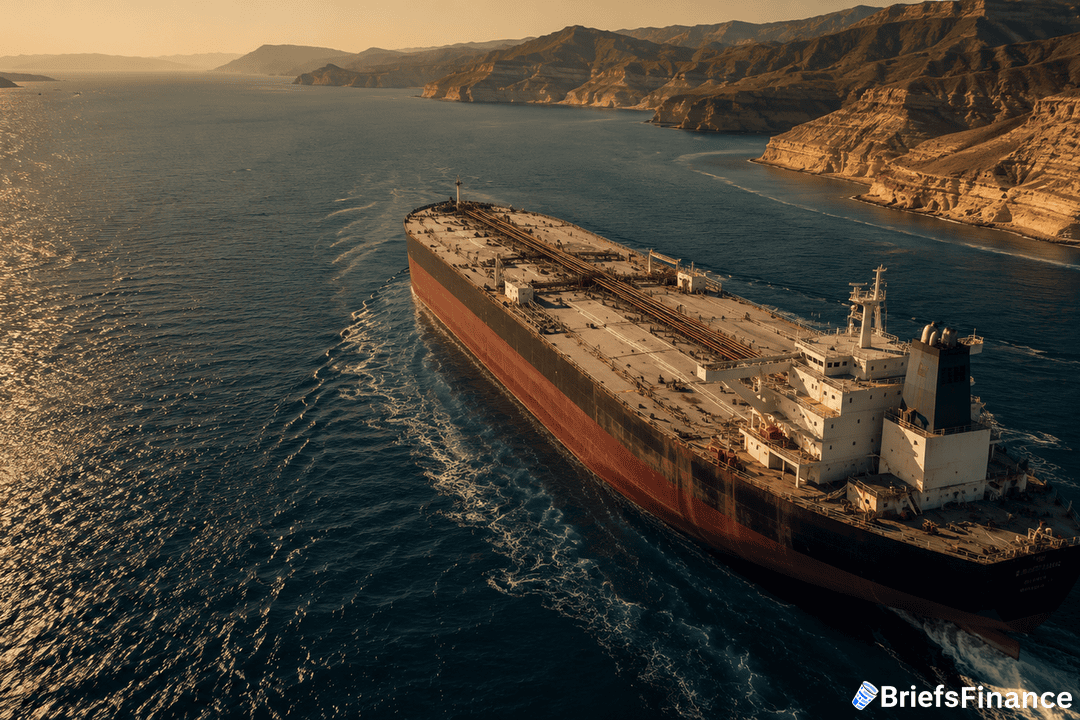
The world's most-watched oil tanker route used to cost between $40,000 and $100,000 a day. Iran's war turned that number into $600,000.
That gap is now the center of a London court fight that could cost (or save) the global shipping market billions, depending on how it lands.
What's Actually Being Disputed
The benchmark in question is called TD3C, which tracks the cost to ship oil from Ras Tanura in Saudi Arabia, the biggest offshore oil loading terminal in the world, to Ningbo in China.
The route runs straight through the Strait of Hormuz, where Iran's war has pushed up shipping costs by squeezing tanker traffic and risk insurance.
The benchmark itself is set by the Baltic Exchange, a 282-year-old London institution that publishes the rates used to price freight contracts and shipping derivatives.
Billions of dollars in trades ride on the numbers the exchange puts out, which is why getting them wrong has knock-on effects across the whole oil market.
The Money At Stake
Mercuria is a Switzerland-based commodity trader, and it says the Iran war has broken the benchmark by inflating the rate beyond what the real market would charge.
Mercuria wants Baltic to use a different route to set TD3C, like one out of Oman, where shipping traffic isn't being disrupted by the war.
Its losses so far run in the hundreds of millions of dollars, according to barrister David Wolfson, who told the court the broader spillover to financial markets tied to the benchmark runs into the billions.
The Baltic Exchange says it has met all of its legal and regulatory duties, with its lawyer James McClelland telling the judge that the right body to scrutinize the benchmark is the Financial Conduct Authority, the UK's market regulator.
If you want the daily news that actually matters for your money, Market Briefs breaks it down in five minutes, and you get a free investing masterclass when you join.
What To Watch
Judge Christopher Butcher granted Mercuria a fast-track trial starting October 26, saying the case isn't just about damages but about the legal position on the benchmark itself.
A ruling is expected by the end of this year or early 2027, which is quick by High Court standards.
If the court sides with Mercuria, expect a real shake-up in how oil shipping rates are set during conflicts, with knock-on effects for tanker companies, oil traders, and insurance markets.
If Baltic wins, the benchmark stays where it is, and every trader who relies on TD3C keeps eating the cost of a wartime rate spike.
The bottom line: A 282-year-old benchmark is about to get its day in court.
For more daily reads on how big events move the markets, Market Briefs lands in your inbox every morning, and a 45-minute investing course comes with the sign-up.