Free NewsletterPro Login

Google Just Ordered 3 Million AI Chips From Intel For 2028

Published Jun 8, 2026
Share:
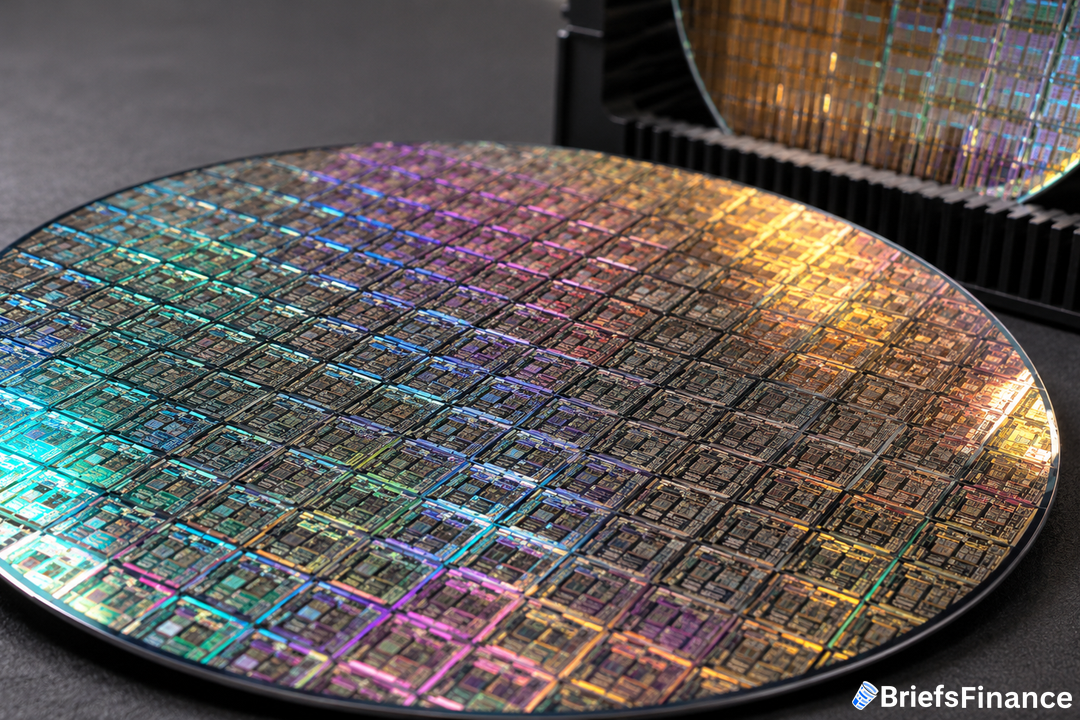
A close-up of a silicon wafer featuring multiple microchips with a rainbow sheen, reflecting light. The wafer sits on a dark surface, and another wafer is visible in the background.
Summary:
  • A report says Google ordered more than 3 million of its in-house AI chips from Intel for 2028.
  • Intel shares jumped more than 9% on the news and are up around 169% this year.
  • The order is a sign that big tech wants to stop leaning on one chipmaker, Taiwan's TSMC.

Intel spent years being called the chipmaker that lost its lead. Its stock paid the price.

This year tells a new story, with the shares up about 169%. A fresh report just added fuel to the comeback.

The Order

Google has placed a big order with Intel. It wants more than 3 million of its own AI chips, built in 2028.

That news comes from tech outlet The Information. The report cited people close to the talks, and neither side would confirm it.

These chips are called TPUs. Google designs them to run its AI.

Building so many takes a partner with huge factory space. That is where Intel comes in.

Investors liked the news. They sent Intel shares up more than 9%.

Intel would not comment, and Google did not reply right away.

AI chips are where a huge amount of market money is flowing, and Market Briefs explains who's winning every morning in five minutes - plus a free investing masterclass when you sign up.

Why Intel, Why Now

The AI boom needs more chips than the world can make. Most of that work runs through one firm, Taiwan's TSMC.

When the top supplier is swamped, buyers look for a backup. Picture the only bakery in town during a holiday rush.

Orders pile up faster than it can bake. That is TSMC right now, so Intel is trying to be the second oven.

That is why Intel's for-hire factory looks valuable again. This is the side of Intel that builds chips for other firms.

One analyst put it plainly. The biggest AI players want to spread out a supply chain that leans too much on TSMC.

There is a second reason to pick Intel. It builds chips on U.S. soil.

That keeps Google and others close to Washington, which wants more chips made at home.

The Trump team has even nudged firms to send Intel work.

A String Of Wins

Intel lost its lead to TSMC after years of missteps. Now it wants the crown back.

The Google deal caps a good run under boss Lip-Bu Tan. The firm has pulled in cash from the Trump team, Nvidia, and SoftBank.

It also landed Tesla as its first big factory customer. That deal ties Intel to Musk's new chip plant in Austin.

Word broke last month that Intel may build some chips for Apple too. Even Nvidia is testing Intel's work.

Nvidia wants to know if Intel can fuse four chips into one. But it has not placed an order yet.

For Google, the goal is bigger than one deal. It wants its own chips to rival Nvidia's, and strong TPU sales already help drive its cloud business.

Worth Noting

A 2028 order is years away, and these reports can change. Still, the trend is clear.

The firms that own AI want more than one place to get their chips. Intel spent a decade losing ground, and it is spending this year trying to win it back.

Join 350,000+ investors reading Market Briefs for the market in five minutes a day, and you'll get a 45-minute investing course as a bonus.

Disclosure

Get Market Briefs delivered to your inbox every morning for free!

No fluff. No noise. No politics. Just finance news you can read in 5 minutes.

Blogs

May 30, 2026
Financial Literacy Books That Actually Build Wealth
  • The best financial literacy books don't just teach budgeting, they shift how you think about money.
  • Two classics stand out: The Intelligent Investor for valuing investments, and Rich Dad Poor Dad for the owner's mindset.
  • Reading is only step one. The real wealth comes from acting on what you learn.
Read More
May 30, 2026
What Is a Roth Conversion? A Simple Guide
  • A Roth conversion moves money from a traditional retirement account into a Roth account.
  • You pay taxes on the money now, in exchange for tax-free growth and withdrawals later.
  • It can pay off if you expect higher taxes or more income in the future, but the timing and tax hit matter a lot.
Read More
May 30, 2026
Trailing Stop Loss: How to Protect Your Gains
  • A trailing stop loss is an order that automatically sells a stock if it falls a set percentage from its recent high.
  • As the stock rises, the sell point rises with it, locking in gains while capping losses.
  • It's most useful for active strategies like momentum investing, not for long-term buy-and-hold.
Read More
May 30, 2026
5 Types of Wealth: Why Money Is Only One of Them
  • Real wealth is more than a bank balance. It spans your finances, health, mind, purpose, and freedom.
  • Money is powerful, but it amplifies the life you already have rather than fixing a broken one.
  • True financial wealth means your cash flow covers your expenses, so your money works while you live.
Read More
May 30, 2026
How to Invest in Private Equity: A Beginner's Guide
  • Private equity means investing in companies that aren't listed on the stock market.
  • Traditional private equity is built for experienced, high-net-worth investors with large amounts to invest.
  • New rules have opened more accessible paths, like startup crowdfunding and real estate deals, often starting around $100.
Read More
May 30, 2026
What Is a Call Option? A Simple Guide With Examples
  • A call option gives you the right to buy a stock at a set price by a set date.
  • Investors buy calls when they expect a stock to rise, using less money than buying the shares outright.
  • The most you can lose buying a call is the premium, but time works against you, so it's an advanced tool.
Read More
May 30, 2026
EBITDA Formula: How to Calculate It Step by Step
  • EBITDA stands for Earnings Before Interest, Taxes, Depreciation, and Amortization, a measure of a company's core profit.
  • The formula adds those four items back to net income to show what the underlying business earns.
  • Investors use EBITDA to compare companies and to judge how many times earnings a stock is selling for.
Read More
May 30, 2026
What Is a Stock Option? A Plain-English Guide
  • A stock option is a contract giving you the right, but not the obligation, to buy or sell a stock at a set price by a set date.
  • There are two types: calls (the right to buy) and puts (the right to sell).
  • Options are powerful but risky, so they suit investors who already have the basics down.
Read More
May 30, 2026
Put Option: What It Is and How It Works
  • A put option gives you the right to sell a stock at a set price by a set date.
  • Investors use puts to bet a stock will fall, or as insurance to protect shares they own.
  • The most you can lose buying a put is the premium you paid, which makes it a defined-risk tool.
Read More
May 30, 2026
Operating Margin: What It Is and How to Calculate It
  • Operating margin shows how much profit a company keeps from its core business after paying its running costs.
  • The formula is operating income divided by revenue, shown as a percent.
  • A strong, steady operating margin signals a well-run business that controls its costs.
Read More
1 2 3 22
Share via
Copy link










