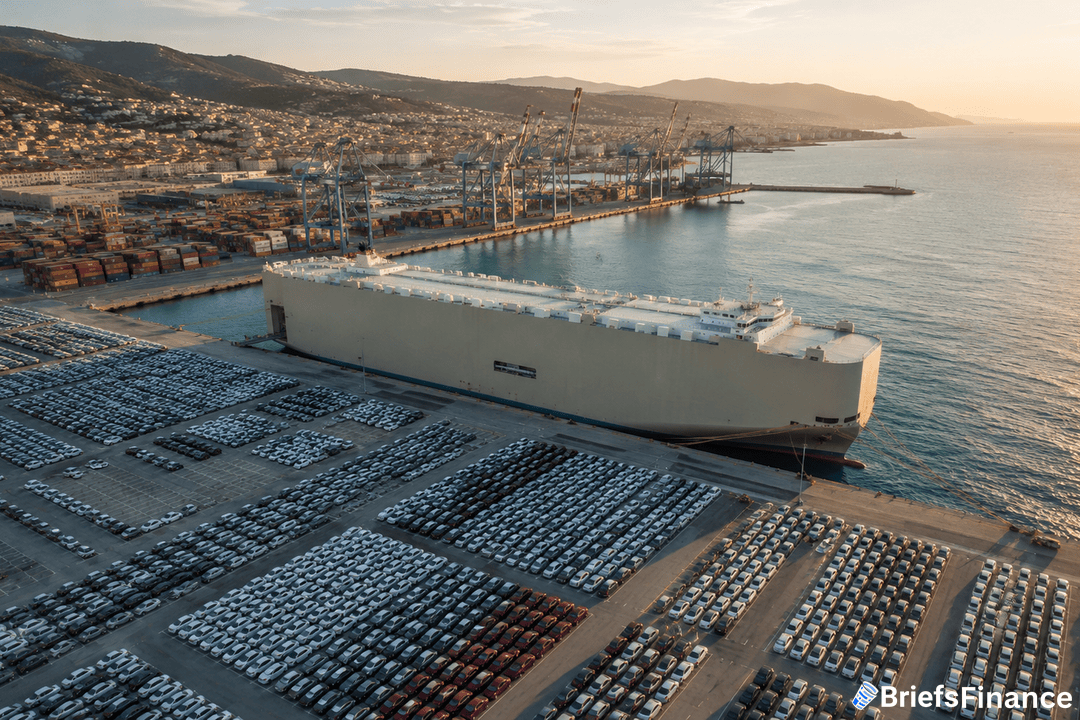
China doesn't just want to sell cars in Europe. It wants to control how they get there.
A Front Door For Chinese Cars
Cosco is China's big state shipping firm. It is taking over a terminal at the Port of Tarragona in eastern Spain, near Barcelona.
The job for that port is clear. It will mainly bring in 300,000 a year in Chinese-made cars.
Many of them will likely be electric or hybrid. China leads the world in building them.
The deal is large and long. It runs for 50 years.
It also comes with a 116 million euro spend, or about $135 million. The money will rebuild the port from the ground up.
The new site will be big. It covers more than 510,000 square meters.
It can move a lot of freight. At full tilt it handles about 680,000 shipping containers a year.
It will also take cars, general goods, and cold storage. The ownership split shows who is in charge.
A Cosco-led venture holds 51%. The rest sits with the Spanish arm of an Argentine group called PTP.
The site near Barcelona is a busy trade hub. It already moves goods across the region.
Moves like this reshape entire industries - we connect the dots for investors each morning in Market Briefs, with a free investing masterclass when you sign up.
Why Spain, Why Now
Chinese carmakers are pushing hard into Europe. They need places to unload their cars.
Spain sits in a handy spot. It links Far East shipping routes with the rest of Europe.
European tariffs make local landing spots valuable. A friendly port softens the cost of getting in.
China sees Europe as a key growth market. This deal locks in a way in.
Owning the terminal gives China the on-ramp, not just the cars. Think of a coffee chain that stops renting shops and starts buying buildings.
Once you own the entrance, you set the terms. That is the play here.
The port's chief called it "a historic moment." He said Tarragona could become a key gateway for trade from China and Latin America.
What To Watch
Not everyone in Spain loves the deal. A 50-year handover to a Chinese state firm has raised some political questions.
It has not hit serious pushback yet. But it fits a pattern.
Cosco poured $1.3 billion into a port in Peru. That deal stirred its own fights over Chinese control.
The timing is awkward, too. A big sale of Hong Kong-linked port assets is stuck in limbo.
The US is watching closely as well. It keeps pushing back on China's grip on global ports.
Spanish leaders still must sign off on the final terms. Local groups will watch the rollout closely.
For now, the plan is moving ahead. The contracts come next.
China already builds the cars. Now it is buying the docks they arrive on.
Want to see these shifts before they hit the headlines? Join Market Briefs and get a 45-minute investing course as a bonus.