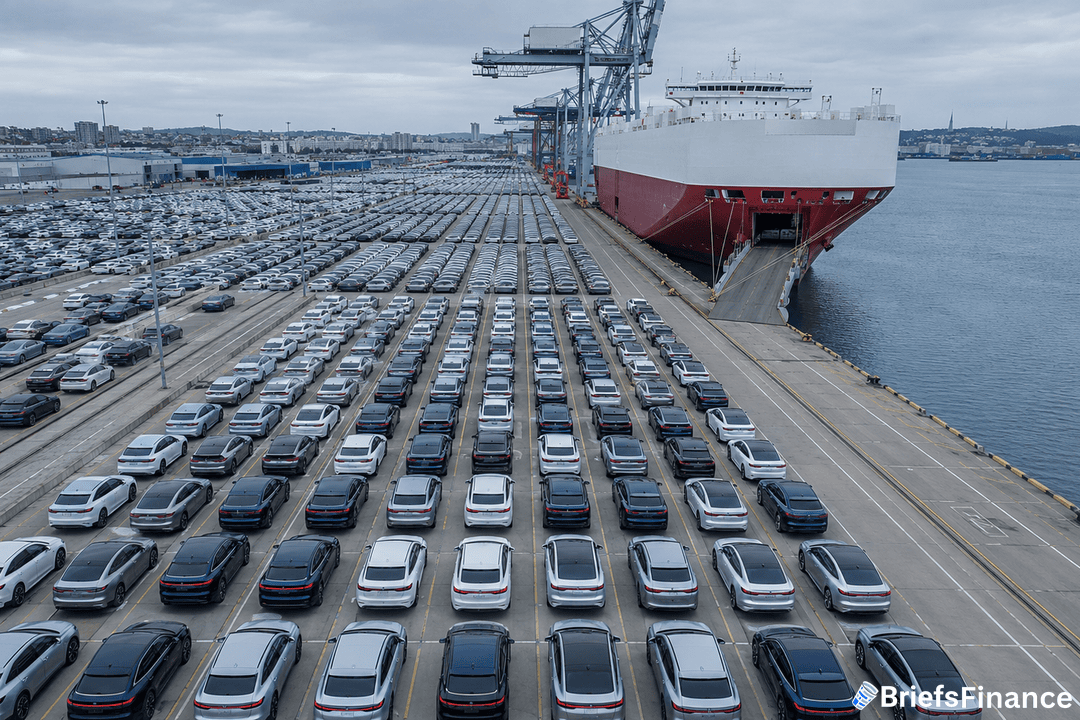
Europe slapped tariffs on Chinese EVs to slow them down. It isn't working.
Chinese brands like BYD and Chery more than doubled their European EV sales in April from a year ago. They now hold more than 15% of the EV market for the first time, per car data firm Dataforce.
The Tariff Wall That Isn't Holding
A few years back, Chinese makers sold just a few thousand EVs a month in Europe. In April they sold 38,281. And that's only the fully electric ones.
Add in plug-in hybrids and Chinese brands took nearly 29% of that group too. The growth isn't stuck to just one slice of the market.
The full European car market tells the same story. Chinese brands are closing in on 10% of all new cars sold across the region.
The growth runs on cars that often cost less than European ones. They also match the locals on tech - things like driver aids, in-car software, and battery range. Those used to be premium add-ons in Europe. They come standard in Chinese cars.
BYD is now pushing into the high-end too with its new Denza brand. That means Chinese makers don't want to be the cheap pick anymore.
Curious what shifts like this actually mean for your portfolio? Market Briefs breaks it down every morning, with a free investing masterclass thrown in when you sign up.
Building Inside Europe To Skip The Tariffs
The next phase is already in motion. BYD is building its own car plants inside the European Union. That move lets it ship cars to European buyers without paying tariffs.
Stellantis owns Peugeot and Fiat. It took a different route. The European giant cut factory-share deals with Chinese makers Leapmotor and Dongfeng. It's teaming up with the rivals instead of trying to outrun them.
The UK has become the clearest test case. There are no tariffs on imported EVs there. Chinese brands are pouring in.
Chery's Jaecoo 7 SUV was the best-selling car in Britain in March. It beat every legacy European brand.
What To Watch
The tariff plan was meant to give Europe's car brands time to catch up. Instead, Chinese makers are growing faster, going more upmarket, and now setting up local plants that side-step the tariffs.
Legacy car brands like Volkswagen, Stellantis, and Renault are about to find out how much room there is to share. The fight for Europe's car market is on.
The bigger risk for investors is the spillover. The same Chinese makers eating Europe's lunch are now lining up to push into other markets. Brazil, Mexico, and parts of Southeast Asia are all next.
For U.S. investors, this matters too. President Trump has kept stiff tariffs on Chinese EVs to keep them out of the U.S. market. Watch what happens if Chinese brands set up plants in Mexico, the way BYD is doing in Europe. That would be a quick way around the U.S. tariff wall.
For now, the EU's tariffs look more like a speed bump than a wall.
Investors should also watch the supply chain plays. BYD and CATL make most of the world's EV batteries. As Chinese cars take more share, more of those batteries get sold too. That hits firms like Tesla, GM, and Ford, which buy many of their parts from Chinese suppliers.
If you want this kind of read every weekday, sign up for Market Briefs and get a free 45-minute investing course as a bonus.